












Personal Development…but Add Horses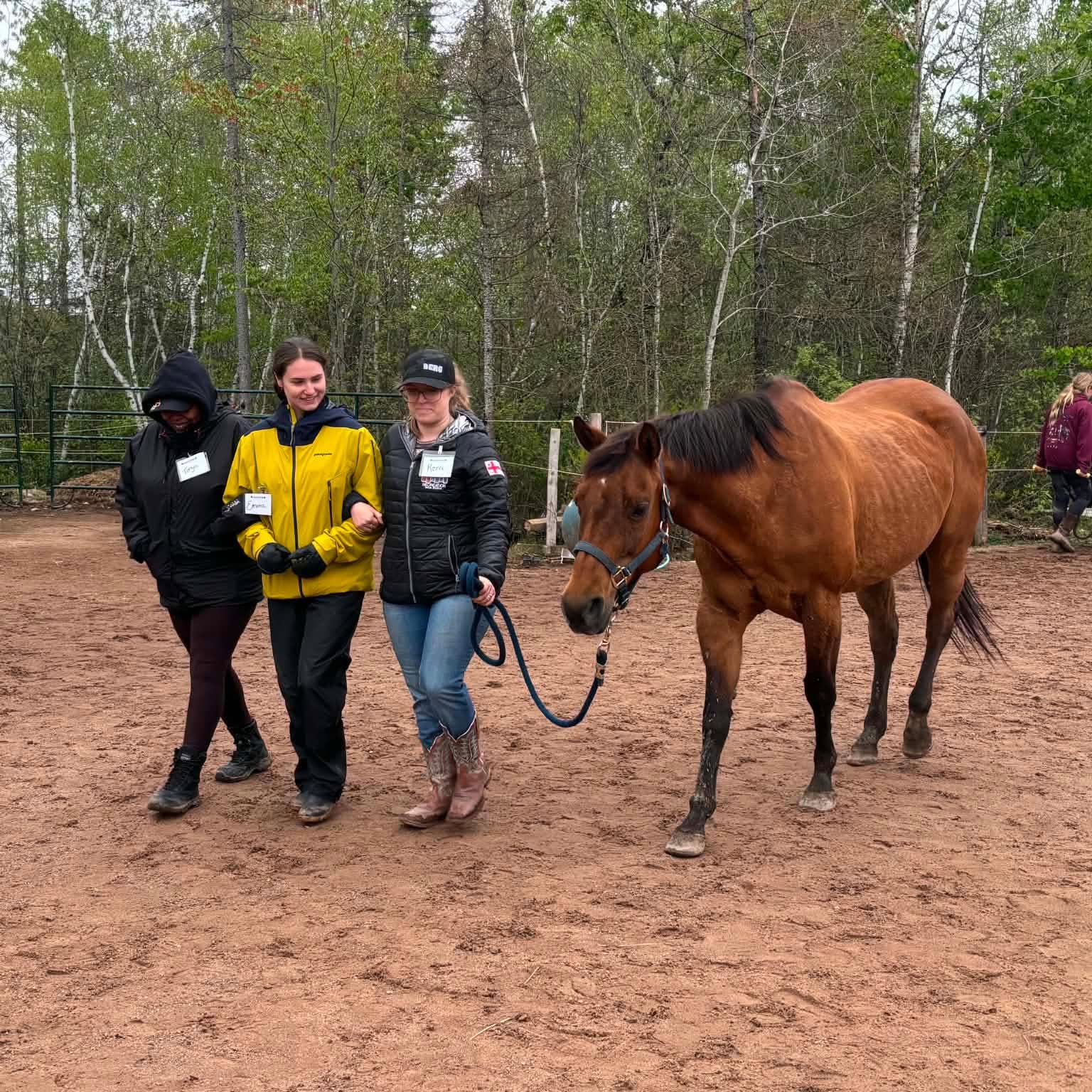
By Kerri Jack
When I started hanging out at my local barn, I had no idea my journey with horses would lead to spending 5 days in a cold shed and muddy arena learning how to facilitate personal growth with the help of horses…but that is exactly what happened.
My story starts two years ago, when a good friend of mine invited me to spend the afternoon at a local horse barn. I happily agreed, not really anticipating much more from the experience than an afternoon spent with a friend, but I instantly felt at home. My whole personally may have changed after that day; I was now set on being a horsey girl. I almost instantly connected with the largest horse on the property, a draft cross named Hoss. Hoss was purchased as a “husband horse”, a large, bomb proof horse that any man could ride on the trails when the opportunity arose. Because he wasn’t in active work, he tended to be a bit harder to catch in the field and wasn’t always the first choice of regular riders or visitors.
But for some reason, I saw him and he saw me. It was an instant connection.
That is where my journey with horses truly began. I spent a lot of time at the barn with Hoss as my horse of choice. He seemed to choose me as much as I chose him. He would often approach me in the field and was so patient as I learned the basics of horse care, like how to properly put on a halter, where to attach a lead line and what side to stand on, and even tolerated the odd eye poke, twisted rope or wrong move.
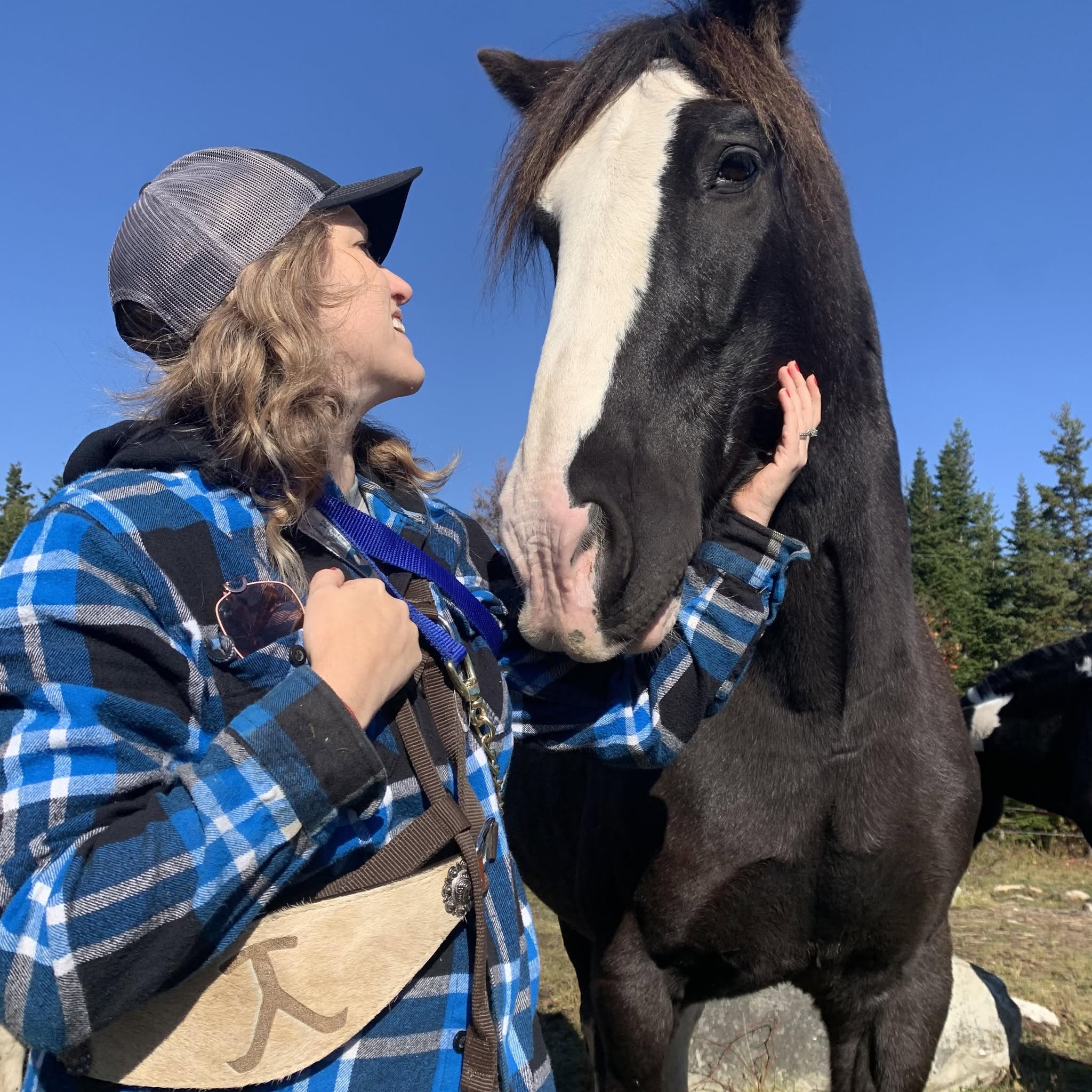 My first couple of months consisted of learning about horses; their unique language and how they communicate, heard dynamics and horse care. But most importantly, I realized how insanely healing it was to spend time with horses. I didn’t think I had much interest in riding horses at first, until one day, out of no where, I jumped on Hoss bareback (don’t freak out, he’s bombproof, remember?). I soon began taking riding lessons and even attended a few shows in the summer of 2025. Though I enjoyed riding and showing, I never really lost that desire to connect with horses in a non-riding capacity.
Throughout my first year at the barn, I had been introduced to the idea of equine assisted learning (EAL). EAL is a hands-on, non-riding, experiential approach to personal and professional growth that involves working with horses. Through activities with the horses, people explore skills like communication, confidence, emotional awareness, problem-solving, teamwork, and leadership. An example of an EAL activity would be to navigate a horse through an obstacle course with a four-person team, except one team member is blindfolded, one cannot speak, one cannot hear and one cannot use their hands. How will you work together to achieve your goal and most importantly, will your horse respond to your effort? What will you do if your horse doesn’t follow the plan? What will you learn about yourself, your teammates and your horse through the process. That’s EAL.
In the winter of 2026, I was approved for a $12,038 grant through the Government of Canada’s New Horizons for Seniors Program to develop and host an EAL program in the community, which would be offered for free to seniors. Now the hard part began, to create this program from the ground up.
After connecting with an online EAL community, finding a local mentor and doing a lot of research, it was a no brainer to go through the Cartier Farms Equine Assisted Learning certification program. Cartier is the leading provider of EAL programming and certification in North America. They have been in the business for 24 years and have been the subject of three major research studies. Thanks to the leadership of Jessica Pike, board member of the non-profit therapeutic farm, Arrow of Light Association, I was able to take the certification right here in Nova Scotia. Jessica worked tirelessly to secure funding through the Native Council of Nova Scotia’s Aboriginal Peoples Training & Employment Commission to host a Cartier Farms Certification course in Elmsdale and to fund four Indigenous women to complete the certification.
Now we are at the part of the story where I found myself in a cold shed and muddy arena for 5 days.
The course took place in Elmsdale, utilizing an outdoor arena at a local hobby farm and the shed of a nearby home for classroom work. In true Nova Scotia fashion, it was cold, rainy and foggy for most of the week. The course was mentally tough. The mornings were spent in the classroom, learning the program theory and the afternoons were spent in the arena, facilitating EAL programming. The evenings were for homework and exam preparation. For 5 days straight, I lived and breathed EAL.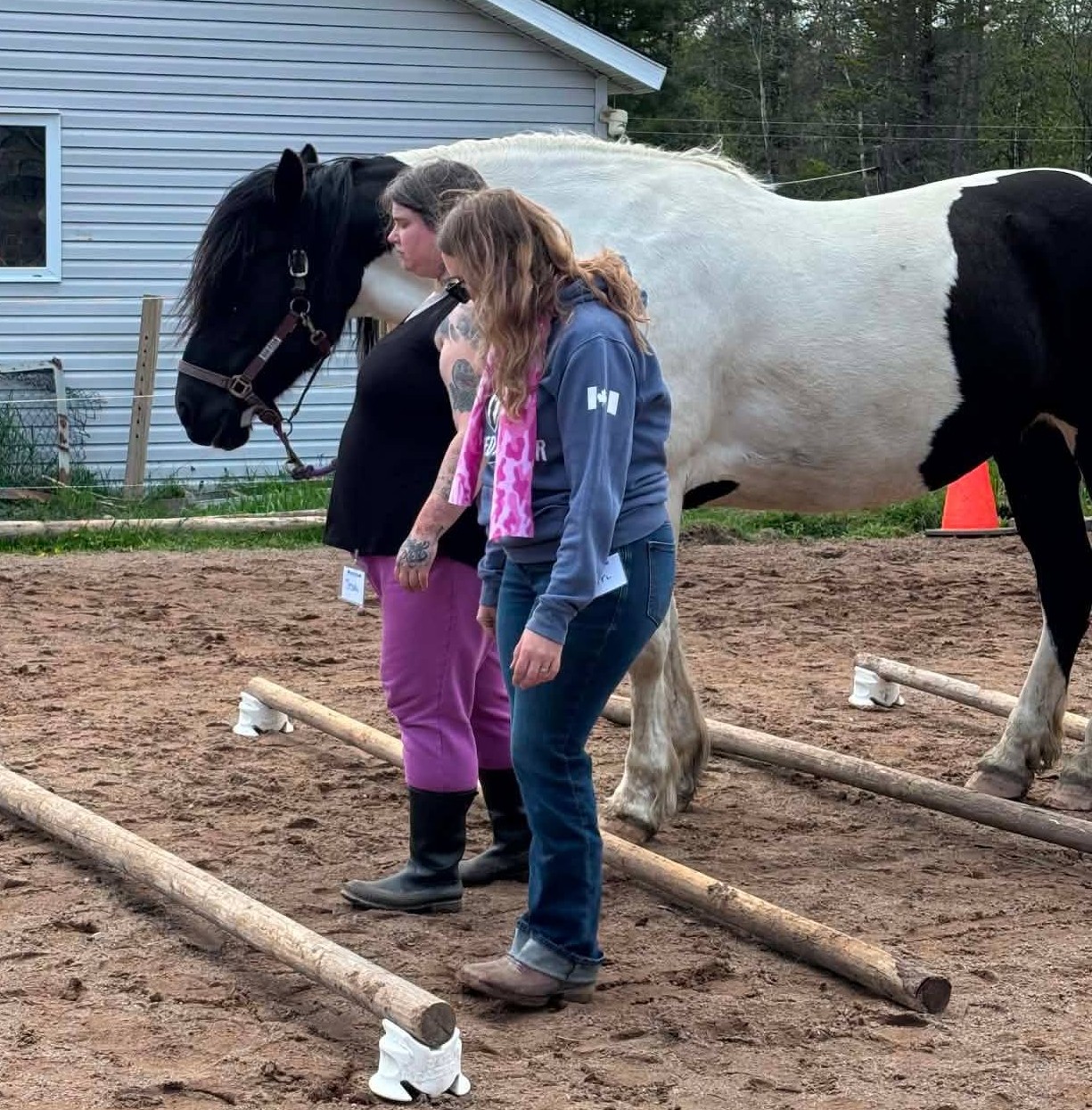
I was surprised to be tasked with facilitating a group of volunteers on day one of the course, after only one morning of instruction and a lunch period to learn the activity and prepare. I got through it, but I will not lie to you, some tears were shed. I learned quickly that my recreation experience did not prepare me to be an effective EAL facilitator. I had to practice saying less and intervening less so that I was not interrupting the learning experience of the participants in my group.
I learned quick that facilitating EAL is not about me, it is about the participants and the horse. I had one participant who struggled during portions of the activity, and I wanted so much to step in and make the experience positive for them, but that would have been making the experience about me. Personal growth and awareness happen during a challenge or uncomfortable experience. That participant learned something about themselves that day and eventually asked to return for the next 3 days of facilitator training. Day one was a powerful day for me. Even though I broke down and shed some tears during our activity debrief, I learned how powerful EAL is and the impact that even one session can have on a person. That was a lesson I will never forget.
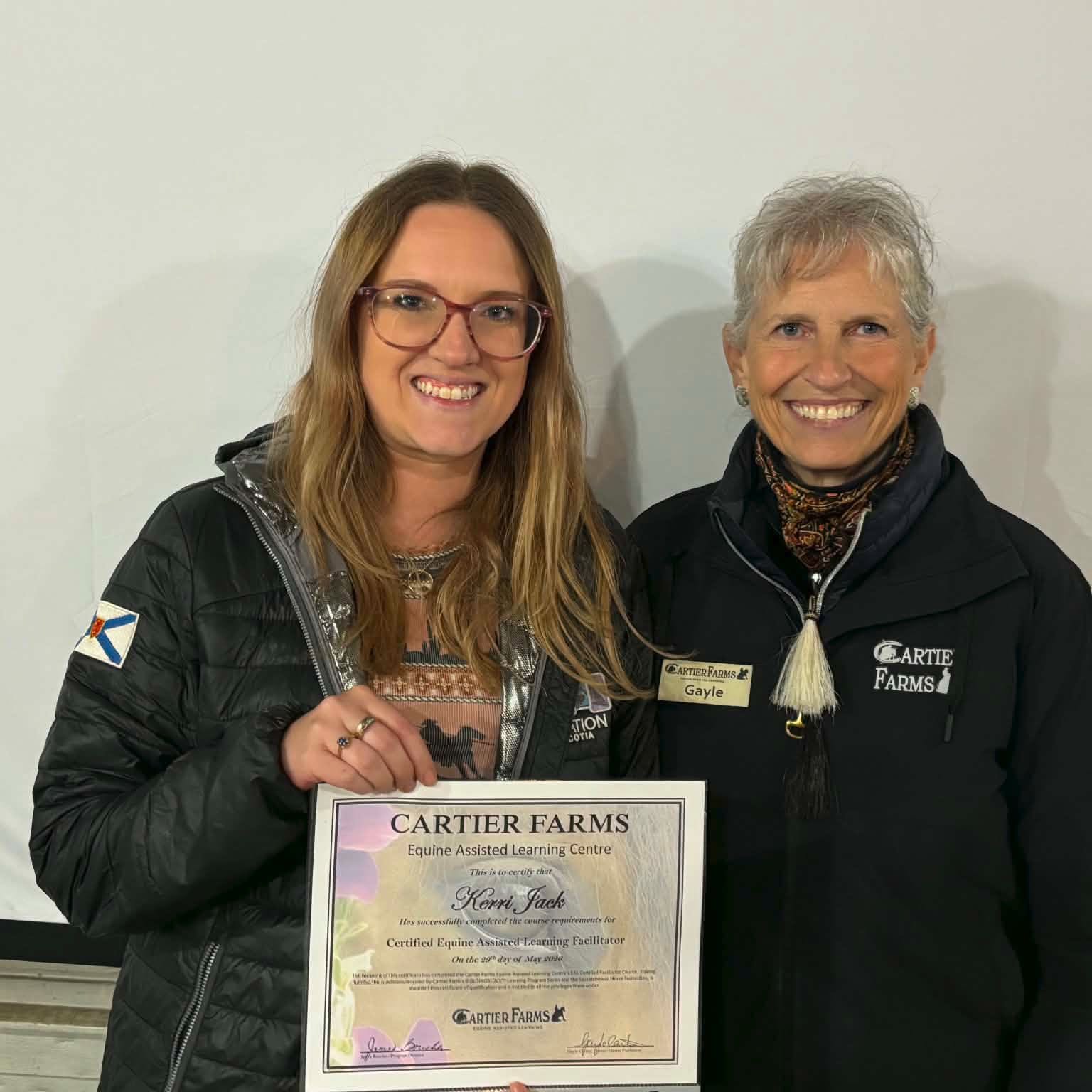 The next four days were very similar. Classwork when it was raining and arena work when it wasn’t. Sometimes I facilitated, sometimes I participated. In between the course requirements, I learned more about my classmates, instructors and hosts and made connections that I hope will last a lifetime.
I left that course with more than a certification…I gained new friendships with a group of powerful and inspiring women; I learned more about myself as a facilitator and a renewed focus and determination to share this amazing program with anyone that will listen. Planning and preparations are currently underway for an EAL program in my community, beginning hopefully over the summer and continuing into the fall.
Over the next few months, if I lead a sentence with, “I just became certified as an equine assisted learning facilitator and…” just bear with me. So much of my professional, volunteer and personal life can be connected to what I learned during that cold week in May and also….just about everything could benefit from adding horses.