












News
EDIA Highlight: The Halifax Lancers Therapeutic Riding Program
- Details
- Category: Stories & Highlights
"Being around horses can have such a calming effect on both our riders and volunteers; it's very magical!" Halifax Lancers Therapeutic Riding Program Volunteer Coordinator, Emily Jewers.
Recreation Nova Scotia's Equity, Diversity, Inclusion and Accessibility Highlights series is kicking off 2025 with a focus on the Halifax Lancers Therapeutic Riding Program. The Halifax Lancers is located in the heart of Halifax and is Canada's only urban, non-profit riding school and equine therapy centre. Lancers' mission is to 'Build Better Lives Through Horses'and have made horses and riding accessible to children in Halifax since 1936. Lancers owns and cares for 29 horses, known as the "Horses of Halifax," and offers programs to riders ages 6 to 75 with varying abilities and skill levels. They also offer an equine-supported wellness program and organize free public events. Among these are the free Musical Ride performances held twice a year in their riding ring across the street from Citadel Hill—once on Canada Day and again during their Open House in the fall.
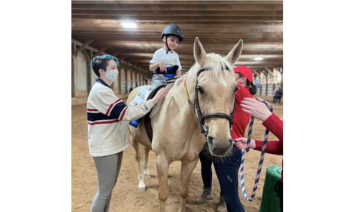
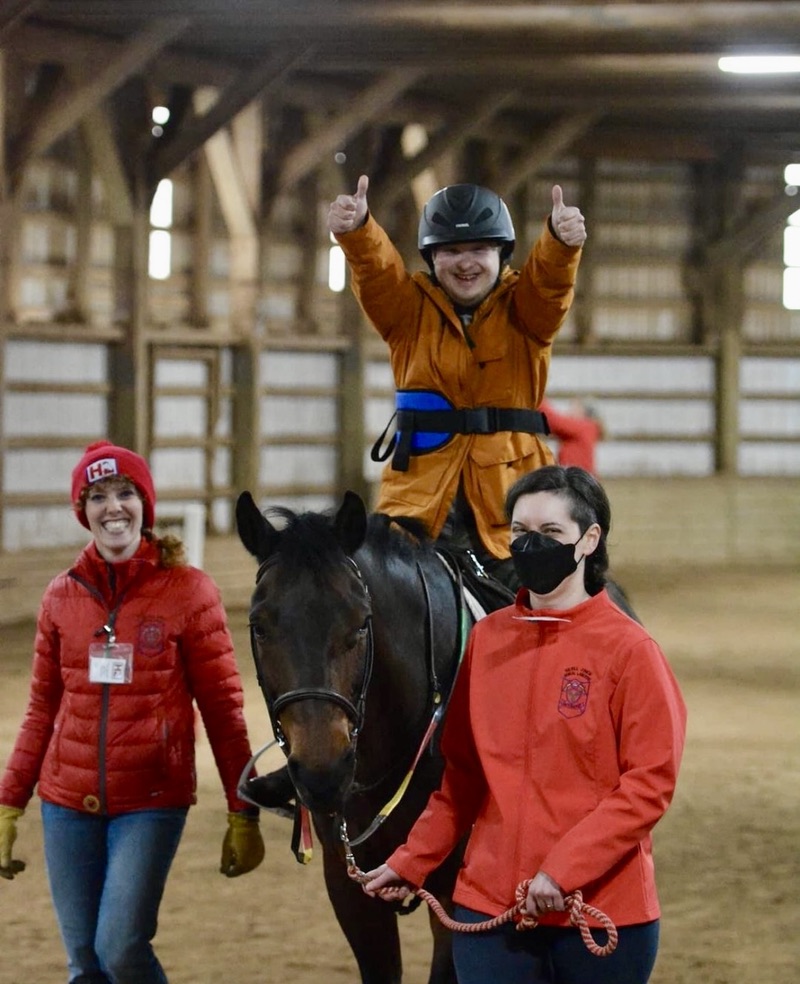 The therapeutic riding program has been in operation since the late 1960s and was originally created for the children's hospital and school for the blind. Today, it continues to be linked to the IWK Children's Hospital in Halifax and still offers therapeutic programming for people with disabilities. Selected horses and ponies receive extra training to prepare for activities and get familiar with the adaptive equipment used during lessons. Participants are provided with approved riding helmets and adaptive equipment they may need to participate. Two program sessions are held annually, which consist of two lessons a week for six weeks.
Because of Lancers' urban location, riders and program participants can walk, bike, and use Halifax Transit routes to reach the facility. The facility's parking area can also accommodate those requiring Access-A-Bus transportation.
Lessons are guided by instructor Juliana Boyd, volunteer coordinator Emily Jewerand, and a team of 50-60 volunteers. "Our volunteers are at the heart of our program," Emily says. "They are so dedicated and passionate about helping our riders achieve their goals each session. Many volunteers often say they get just as much out of volunteering as they put in and that spending time in the barn makes their day. Being around horses can have such a calming effect on both our riders and volunteers; it's very magical!" Anyone interested in volunteering for a future session can sign up on their website. No horse experience is necessary.
Lancers Board President Lynn Flewelling says therapeutic riding can help improve the physical, mental, emotional, and social well-being of most people with disabilities, "Riding for these equestrians can be a challenging and an invigorating form of exercise and recreation that gives the rider a sense of accomplishment and increased self-esteem." She says that for individuals with disabilities that affect mobility, the horse provides freedom of movement and independence from assistive devices such as wheelchairs and crutches. The physical benefits include improvements in balance and coordination and an increase in agility because of the mobilization of stiff joints and strengthening of muscles. The social, emotional, and mental benefits include improved communication, focus, self-esteem, and confidence.
Lancers strives to keep their programs financially accessible and offers rider bursaries to ensure people from all income levels can enjoy the Horses of Halifax. Lynn explains that donations the organization receives help support the therapeutic riding program, help replace retired horses, fund regular countryside vacations for the horses, cover repairs and maintenance of their heritage stables, and replace or update tack and equipment. Lynn also shared that the organization recently fundraised for an important facility upgrade: "We held a campaign to install an accessible ramp near the entrance to our arena, which has been a wonderful addition to the program."
 Looking forward to the future, Halifax Lancers is excited to announce a new partnership with Easter Seals Nova Scotia. Lancers Stables on Bell Road will host Easter Seals' annual "Learn to Ride" program, an inclusive equestrian day camp for children and youth with disabilities, in the summer of 2025.
RNS New Address
- Details
- Category: News
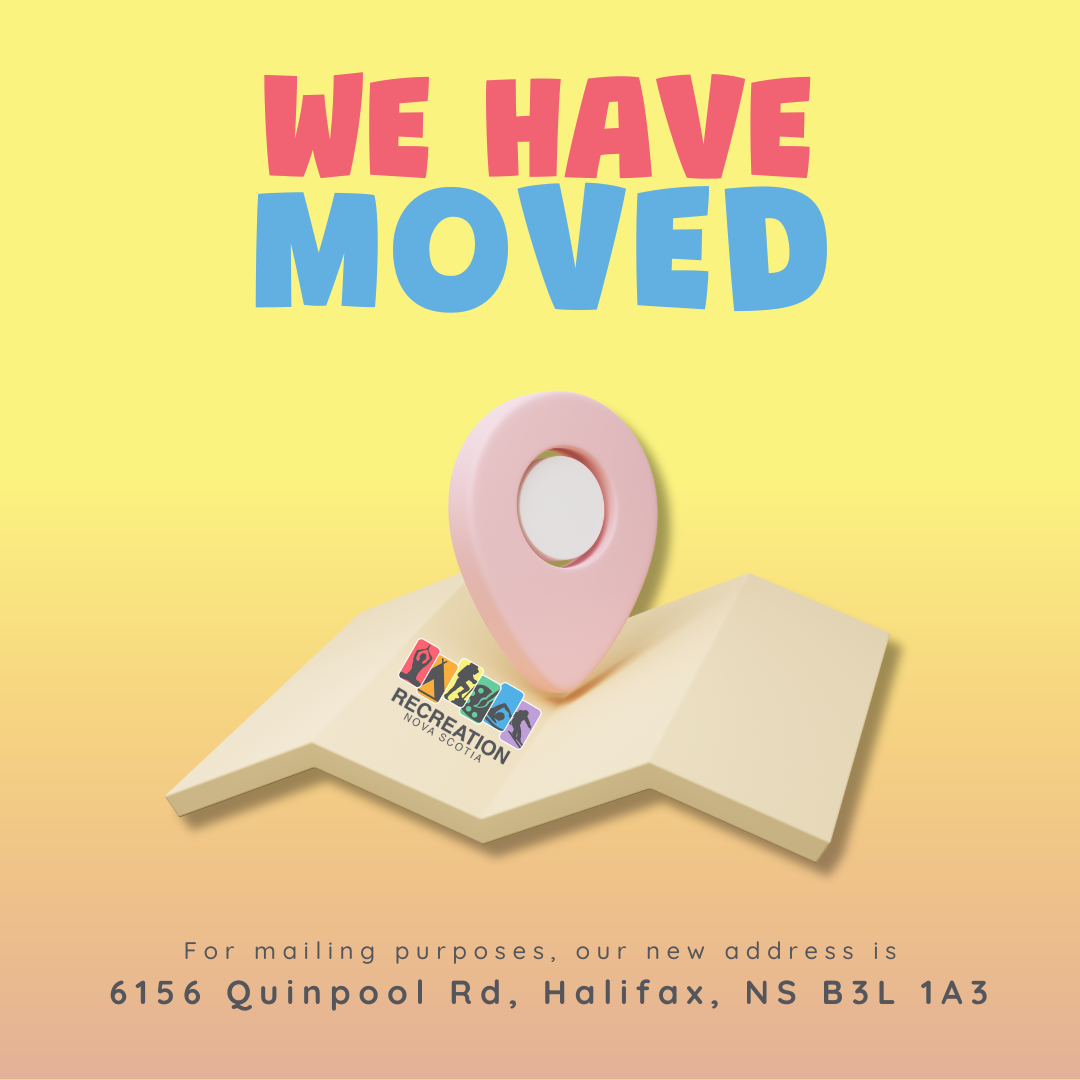
Starting on January 1, 2025, the RNS team will now work completely remotely, allowing us to spend more time with our members in the communities where we live, work, and play.
For mailing purposes, our new address will be 6156 Quinpool Rd, Halifax, NS B3L 1A3.
Please update your files and send all cheques to this new address.
Questions? Email,

International Day of Persons with Disabilities
- Details
- Category: News
December 3 is the International Day of Persons with Disabilities, created in 1992 by the United Nations to promote understanding of disability issues and raise awareness for equal access for people with disabilities. The theme for 2024 is “Amplifying the leadership of persons with disabilities for an inclusive and sustainable future.”
Over 2 in 5 Nova Scotians have a disability. The Nova Scotia Accessibility Directorate has created a website to raise awareness about the experiences of disability in Nova Scotia, accessibility barriers, the Accessibility Act, and work happening across the province to become more inclusive. The website also includes a Resource Hub with video profiles of Nova Scotians with disabilities, posters, postcards, bookmarks, social media graphics, email banners, virtual backgrounds, webinars and more!
Check it out: https://ow.ly/jLU550UeVPb
______________________________________
Want to take part in this important day?
Join Active Living Alliance for Canadians with a Disability Vice Chair Mike Arthur, Project Manager Taryn Barry, and RNS Inclusion and Accessibility Coordinator Kerri Jack on December 3, from 12:00 pm - 1:00 pm on Zoom to learn more about the draft Municipal Guide to Promising and Best Practices for Disability Inclusion in Recreation and Physical Activity and how you can provide feedback and comments.
All are welcome to attend this event.
Register here: https://ow.ly/Uqon50UbYPY

Survey Now Open!
- Details
- Category: News
The first installment of the Municipal Guide to Promising and Best Practices for Disability Inclusion in Recreation and Physical Activity is now in draft form and looking for sector feedback.
This draft includes the first three guideline areas: Inclusive Workplace Culture and Management, Inclusive Programming, and Accessibility in the Built environment. This is a project of the Active Living Alliance for Canadians with a Disability. This project aims to create a best practices document that helps municipal recreation departments be more accessible to people with disabilities. The project now seeks feedback from individuals who understand disability inclusion in recreational and physical activity. This could include recreation staff at the municipal level, persons with disabilities and lived experience, and those working for community organizations or at different levels of government.
At the start of the survey, you will be randomly assigned to read one section of the Municipal Guide and provide feedback on its usability, clarity, and comprehensiveness. Reading your section and providing feedback will take about 10 minutes. You will also have the option to review and provide feedback on additional sections of the Guide. Your responses will be saved automatically, and you can return to the survey later. To resume, click on the original survey link you received and access it through the same browser and device.
Find the survey here: https://ow.ly/JMck50UeZ65
DEADLINE IS DECEMBER 9, 2024
RNS Conducts Spring Check-Ins with Anti-Racism Charter Signatories
- Details
- Category: News
The Anti-Racism Charter in recreation is needed to specifically acknowledge and address the harm and exclusion caused by racism in recreation. A proactive and systemic approach is required to make recreation welcoming and inclusive for everyone in Nova Scotia.
RNS is committed to the continued support of Charter signatories. RNS staff conduct periodic check-ins with organizations. The most recent check-ins occurred throughout the spring of 2024, with 15 of the 33 signatories. Each organization answered eight questions regarding their work on anti-racism and the Charter. The data gathered from these check-ins helps RNS understand how organizations use the Charter, determine what resources or support is needed from RNS, support RNS’ advocacy efforts, and support information sharing amongst current and potential signatories.
Find out what we heard and read about some of our signatories in the Spring Check-In Report here.

Welcome RNS Board 2024-2025!
- Details
- Category: News
Recreation Nova Scotia (RNS) would like to introduce our new Board of Directors for 2024-2025. We want to take a moment to welcome our new Board Members, Wallace Bernard, Recording Officer; Tissy Bolivar, Director at Large; Olivia Walker, Student Rep, and all our returning Board Members.
We also want to extend a heartfelt thank you to outgoing Board Members Gord Tate, Gabrielle Riley Gallagher, and Joel Dawe for their leadership and direction over the years in their roles. We appreciate all you have done for RNS and the sector, and your contributions have been invaluable.
Thank you to outgoing President Rachel Bedingfield for your guidance over the past two years. We look forward to working with you as you transition into the Past-President role.
Wallace Bernard grew up in Wekoqmaq. He has earned a Recreation Leadership and Aboriginal Leadership Development diploma and has been heavily involved in Mikmaw sports and physical activity since then. Wallace has been on the Mission Staff for Team Mikmaw and Team Atlantic for the North American Indigenous Games and The Nation Aboriginal Hockey Championship. He was also on the Host Society Board for the North American Indigenous games. Wallace is very passionate about the outdoors. He likes finding new adventures, either a new waterfall, an epic mountain peak, or kayaking, no matter the season. Wallace likes showing people epic adventures and getting them outdoors. Wallace also volunteers with the local Cape Breton Search and Rescue.
Tissy Bolivar serves as the Program Coordinator for the Municipality of the District of Lunenburg, bringing over 14 years of dedicated experience in municipal recreation. A graduate of Acadia University with a degree in Recreation Management, Tissy has consistently championed the role of recreation in enhancing community well-being. She is deeply committed to fostering inclusive, welcoming spaces that encourage participation for all. In her latest initiative, Tissy introduced the PRO Fund, an adult subsidy program designed to complement the existing PRO Kids program. This initiative ensures that all residents, regardless of financial status, can engage in recreational activities, reflecting Tissy's vision of recreation as a means to support and uplift every community member.
Olivia Walker is in her final year of Community Recreation at NSCC, Truro Campus. Growing up in Digby provided Olivia with many opportunities to develop leadership skills. These skills were developed through the Student Council, NSSSA and Me to We. Olivia also served one year as a DRHS School Advisory Committee student representative. In addition, she was trained to be a lifeguard and swim instructor for Digby Area Recreation Commission. This continued until Olivia graduated high school in 2020. In 2022, Olivia completed her studies at Kingstec NSCC as an Early Childhood Educator with honours. She values creating age-appropriate activities for growth and development and working alongside families.
Enrolling in the Community Recreation program enabled Olivia to obtain the position of Community Recreation Programmer for Digby Area Recreation. Olivia's goal as a Recreation Nova Scotia Board member is to be the voice for incoming students entering the recreation profession and learn from others already working in the field.
Meet the rest of the Board Members here.
RNS inspires and supports a diverse and comprehensive network of partners committed to addressing the recreation needs of all Nova Scotians through the provision of leadership and a strong provincial voice. Under the guidance and counsel from the Board, RNS can continue to champion, promote, and advocate for recreation as an essential element in building healthy, caring, and vibrant communities; facilitate the education and development of recreation professionals and volunteers; and promote connectivity between recreation sector professionals, influencers, and beneficiaries.
The Board of Directors will direct, control, and inspire Recreation Nova Scotia through the established written policies that reflect the values and perspectives of the Board, aiding in what is to be achieved and the means to be avoided. Cultivating a sense of group responsibility, we look forward to each Board Member bringing their individual expertise to enhance the Board as a whole and, therefore, the operations of RNS.
We look forward to working with you all over the next year!